Loading
STORY · EMERGING
F1 Azerbaijan GP: Max Verstappen leads George Russell and Lewis Hamilton in final practice
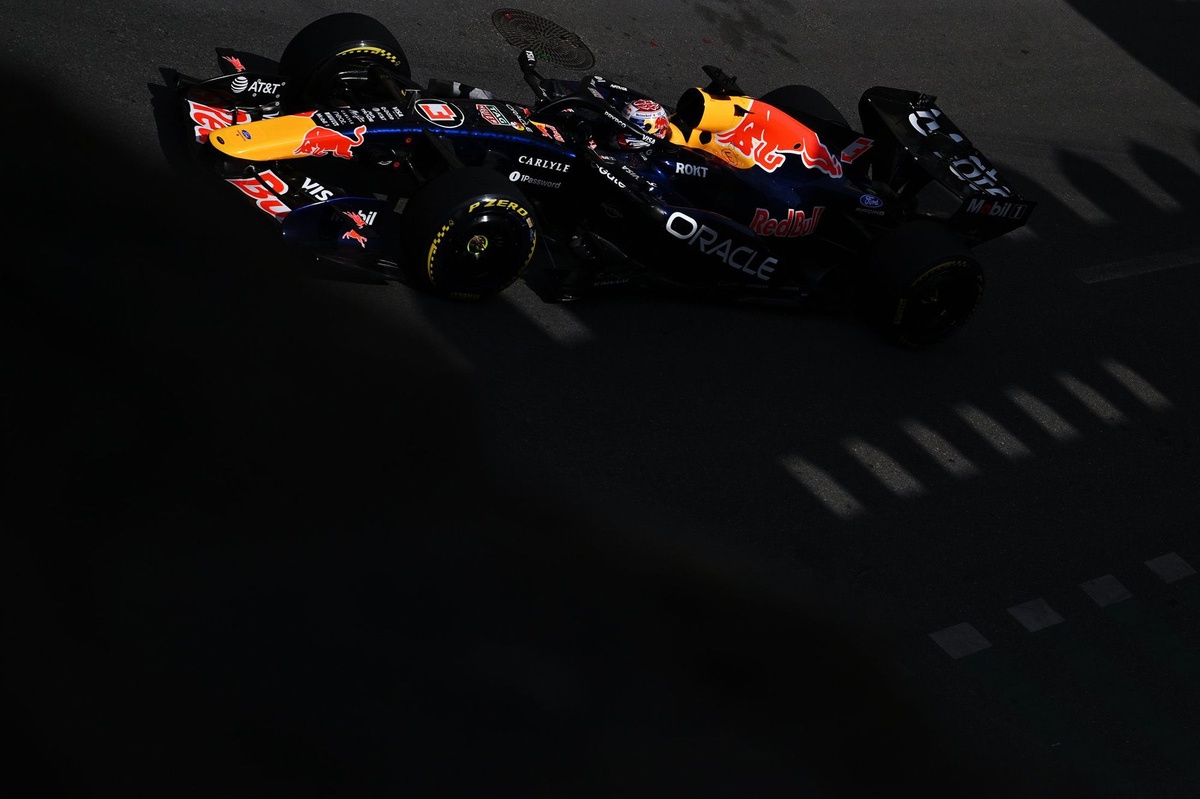
Red Bull's Max Verstappen surprisingly took the fastest time in third and final practice for F1's Azerbaijan GP, pipping Mercedes driver George Russell and Ferrari's Lewis Hamilton on Baku's tricky street circuit. F1 TV pundit Alex Brundle says Max Verstappen relentlessly hunting down George Russell in the closing stages of the Azerbaijan Grand Prix was "nightmare fuel" for the Mercedes driver.
Race2026 Azerbaijan Grand PrixTeamAlpineTeamFerrariTeamMcLarenTeamMercedesTeamRed Bull RacingPersonCharles LeclercPersonFranco COLAPINTOPersonGeorge RussellPersonKimi AntonelliPersonLando NorrisPersonLewis HamiltonPersonMax VerstappenPersonPierre Gasly


FULL BRIEF
The complete story read
Red Bull's Max Verstappen surprisingly took the fastest time in third and final practice for F1's Azerbaijan GP, pipping Mercedes driver George Russell and Ferrari's Lewis Hamilton on Baku's tricky street circuit. F1 TV pundit Alex Brundle says Max Verstappen relentlessly hunting down George Russell in the closing stages of the Azerbaijan Grand Prix was "nightmare fuel" for the Mercedes driver.
WHAT CHANGED
A race that Russell had controlled became a narrow victory after safety-car interruptions brought Verstappen into contention. Russell had built a substantial early lead, but the restart put Verstappen close enough to attack; he remained a threat until the finish. The late pass by the two leaders past Bottas’s crashed Cadillac briefly gave Verstappen another chance, but Russell secured the win. Hadjar’s third place and Antonelli’s recovery to fifth were further defining results.
WHY IT MATTERS
Baku showed how quickly a street-circuit advantage can disappear: the safety-car interruptions reset the gaps and gave Verstappen a realistic shot at Russell. The result also delivered a major team outcome for Red Bull, with Hadjar joining Verstappen on the podium, while Antonelli’s climb from 16th limited the damage from a difficult starting position. The Alpine collision, meanwhile, turned a restart into a significant loss of points opportunities for the team and Norris.
WHAT TO WATCH NEXT
In the next race, watch whether Russell can reproduce the control and restart execution he showed in Baku, and whether Red Bull can sustain the pace that put both Verstappen and Hadjar on the podium. The Alpine restart collision is also a clear follow-up: its effect on the team’s results, and how the drivers respond after the incident, will be worth tracking.